

Keep 3 professional references ready to share, and build a wider roster of 5 people so you can choose references who match the role. Treat those numbers as a practical planning target for your 2026 job search, not an employer requirement. Follow the employer’s requested count, and get each person’s permission before sharing their contact details.
- How many professional references should you have? Keep 3 ready; build a wider roster of 5.
- Choose people who directly observed your work, not people with the most impressive titles.
- Follow the employer’s requested count and confirm permission before sharing contact details.
- Voushify is a pre-launch professional endorsement platform; join the waitlist if structured recommendations fit your job search.
How many professional references should you have?
Prepare 3 references for a typical reference-list request, with 2 additional people in reserve. This gives you a working list without making every contact relevant to every application. It is a recommendation for organizing your search, not a claim that every employer requests the same number.
Use this decision table before sending names. If you also want to collect structured endorsements, Voushify has a waitlist; it is not available to use today.
| Your situation | Recommended approach | Best for | Limitation |
|---|---|---|---|
| The employer specifies a count | Submit exactly the requested number | Following application instructions | Your preferred list still needs to fit the request |
| The employer requests references without a count | Prepare 3 relevant, willing contacts | A clear starting list | Confirm whether the employer needs a different format |
| You are preparing before applications | Build a roster of 5 people | Matching references to different roles | More names do not automatically mean stronger evidence |
| You cannot identify 3 suitable people | Start with the people who know your work directly | Protecting the quality of your list | Ask whether academic or project references are acceptable |
Do not add a weak reference just to fill space. A person who cannot describe your contribution offers little useful signal, even if their title looks impressive.
Why this matters
A reference should help someone understand what you actually did. That means the person needs direct knowledge of your work, enough context to explain it, and permission to discuss the relevant details.
For your 2026 search, organize references around evidence rather than prestige. A colleague who watched you resolve a difficult handoff has something specific to discuss. A senior executive who only recognizes your name does not.
Reference-quality evidence connects a claim to someone who observed it. If you say you led a project, choose someone who can explain what you led, how you worked, and where your responsibility began and ended.
The count gets your list organized. The evidence makes it useful.
Your ready list: 3 professional references
Your ready list contains people you have already asked and whose details you have checked. These are the contacts you can confidently put forward when an employer requests references.
Choose references who cover relevant parts of your work. Avoid treating the list as a collection of interchangeable names.
For example, a project coordinator applying for an operations role might choose:
- A former manager who directly supervised their delivery and priorities.
- A project colleague who worked alongside them on coordination and handoffs.
- A client contact who observed how they handled requirements and communication.
This is an illustrative mix, not a required formula. If your work did not involve clients, do not force a client reference onto the list. Choose another person with direct knowledge of a contribution the role requires.
Check each person against the same question: What can this person explain about my work that the other references cannot? Overlap is fine. An entire list built around the same narrow example leaves other claims unsupported.
Your wider roster: 5 potential references
A wider roster gives you choices. It does not mean sending every name to every employer.
Keep a private record of who observed which work, what relationship you had, and when you last confirmed their willingness to help. Separate confirmed references from people you have not asked yet. Someone belongs on your potential roster before permission; they belong on your ready list after permission.
The additional 2 contacts are useful when a reference declines, becomes unavailable, or is less relevant to a particular role. They also let you adapt your list without asking the same people to speak about work they never saw.
Do not turn this into a collection exercise. Maintaining contact with 5 people who know your work is more purposeful than accumulating names you would hesitate to share.
Your roster is a preparation tool. It is not a document to attach automatically to every application.
Why the right number of references varies
The right submission count comes from the employer’s instructions. The right preparation count depends on the evidence you need and the people who can provide it.
Use these factors to shape your list:
- The requested count. An explicit request takes priority over a general recommendation.
- The requested relationship. If an employer asks for a former supervisor, a peer does not satisfy that instruction by default.
- The work being assessed. Select people who observed responsibilities relevant to the position.
- Your career stage. A student’s strongest evidence can come from supervised academic, internship, or project work.
- Permission and willingness. A name is not ready to submit until the person agrees to act as a reference.
- Confidentiality. If approaching your current manager would disclose a private search, discuss an alternative with the hiring contact.
For a 2026 career change, explain the connection between the reference’s experience with you and the new role. A person does not need to have supervised the exact job you want. They do need to speak accurately about transferable work you actually performed.
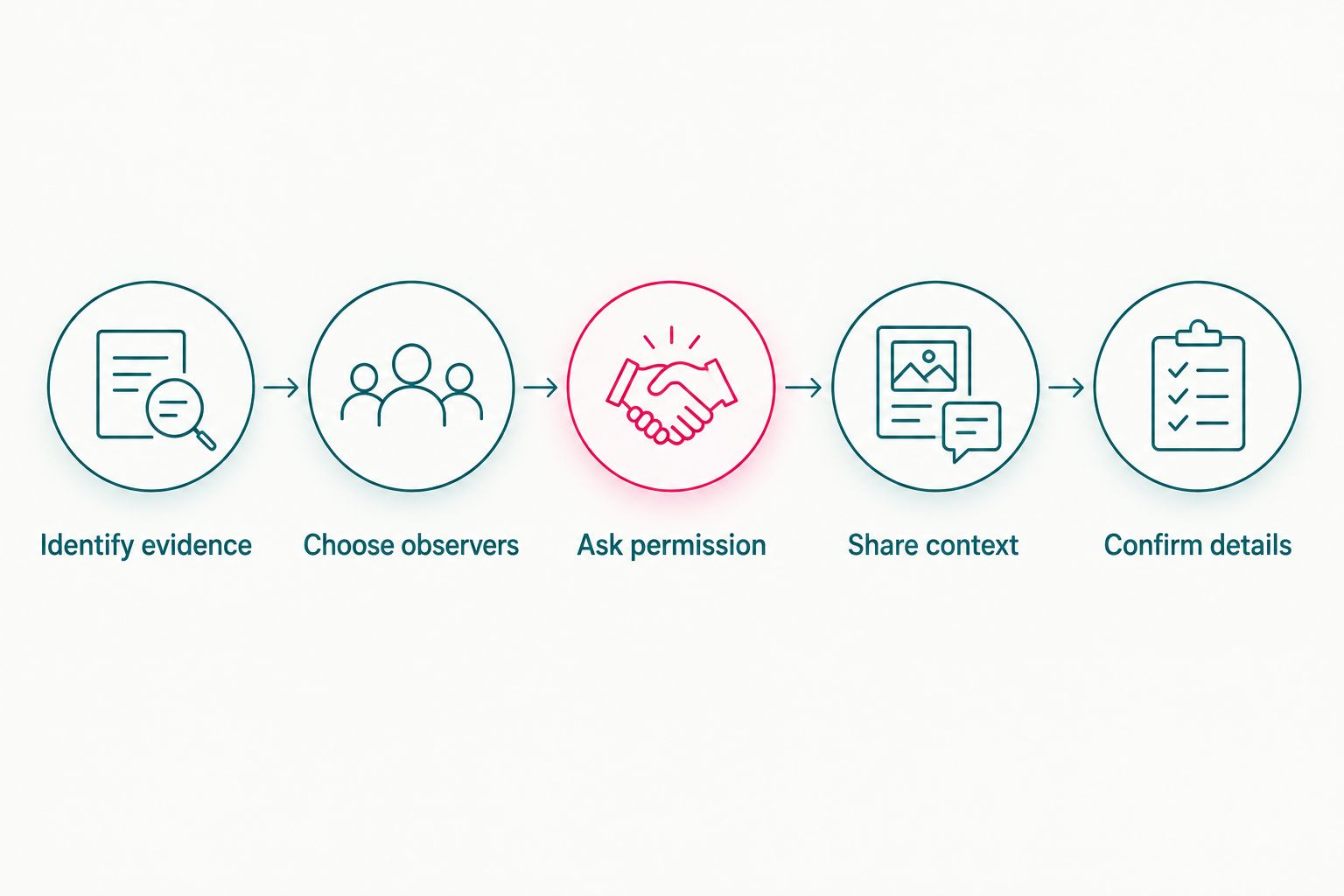
How do you choose and prepare your references?
Make the request easy to understand. Then make the evidence easy to recall. You are helping someone respond accurately, not writing their opinion for them.
1. Identify evidence
Read the role description and identify the claims that need support. Look for responsibilities you can connect to actual work: coordinating a project, analyzing information, teaching a process, or handling a client concern.
Write down the contribution and who saw it. If nobody on your list observed the work, do not ask someone to imply that they did.
2. Choose observers
Choose people based on proximity to the work. A manager can discuss responsibilities they supervised; a colleague can describe collaboration they experienced; a professor can discuss academic work they evaluated.
Explain the relationship accurately on your reference list. A project collaborator is not a former supervisor just because that label sounds stronger.
3. Ask permission
Ask whether the person is comfortable providing a specific, positive reference for the role. Give them room to decline. A reluctant agreement is not a useful foundation for a reference conversation.
Illustrative request: Would you be comfortable serving as a professional reference for an operations role? We worked together on the reporting handoff, and you directly observed how I coordinated the work. I can send the role description and a short reminder of my responsibilities.
4. Share context
Send the role description, your current résumé, and a brief reminder of the work you shared. Highlight relevant responsibilities without supplying invented outcomes or telling the person what opinion to give.
For example, remind a former manager which part of a project you owned. Let the manager describe their own observations and assessment.
5. Confirm details
Check the contact information the person wants you to use. Confirm their preferred professional title and the relationship description. Explain any known submission instructions or deadline.
After submitting the list, let your references know which organization could contact them and for which position. Do not surprise them with a conversation they never agreed to have.
Who should students and recent graduates ask?
Choose people who evaluated or supervised real work, even when that work happened outside paid employment. Ask the employer whether academic, internship, volunteer, or project references fit its requirements.
A professor who assessed a substantial project can discuss more than attendance. An internship supervisor can describe responsibilities they assigned. A volunteer coordinator can discuss work they directly supervised.
Use a concrete example when you ask. Instead of reminding a professor that you took their course, identify the project they reviewed and the contribution you made. This gives the request a clear basis without asking them to reconstruct your entire academic history.
For a 2026 graduate, relevance matters more than making an academic relationship sound like employment. Label the relationship plainly and let the work carry the claim.
Do letters, emails, and endorsements replace references?
Do not substitute written recommendations for requested reference contacts without checking. A letter or email records someone’s account of your work. A reference conversation also lets the recipient ask follow-up questions.
These formats serve different purposes:
| Format | Best for | Strength | Limitation |
|---|---|---|---|
| Reference contact | Employer questions about observed work | Allows direct follow-up | Requires the person’s agreement to be contacted |
| Reference letter | A written account of a contribution or working relationship | Preserves context in a document | Does not itself answer new questions |
| Emailed recommendation | Collecting written feedback from someone who knows your work | Keeps the recommendation in the sender’s own words | Needs permission before wider sharing |
| Structured endorsement | Organizing recommendations into a shareable professional profile | Connects recommendations within a structured format | Does not remove an employer’s reference requirements |
Voushify is for job seekers who want structured, shareable endorsements of their work. Its professional endorsement platform turns recommendations from colleagues, managers, professors, and clients into Voushes that build a shareable professional trust profile.
Voushify is pre-launch. Join the waitlist if that format fits your preparation; keep collecting useful letters and emailed recommendations, and follow each employer’s instructions about references.
Join the waitlist
Prepare for structured, shareable endorsements of your work. Voushify is pre-launch.
Is it better to have 3 or 5 references?
Use 3 references as your ready-to-share list and 5 people as your wider roster. That separates the contacts you submit from the relationships you maintain. If an employer requests a different count, submit that count instead.
What if you only have 2 professional references?
Start with 2 strong references rather than adding someone who cannot discuss your work. If an employer requires more, explain your situation and ask whether an academic, internship, volunteer, or project reference meets its requirements.
Should you put references on your résumé?
Keep your 3-reference list separate unless the application instructions request references on the résumé. A separate document lets you select relevant contacts and confirm permission before sharing their details. Include each person’s name, professional title, relationship to you, and agreed contact information.
FAQ
How many professional references should I have in 2026?
Keep 3 professional references ready and build a wider roster of 5 people as a practical planning target. Follow the employer’s requested count whenever it specifies one.
Can I use a coworker as a professional reference?
A coworker is a useful reference when they directly observed relevant work and the employer accepts peer references. Describe the relationship accurately rather than presenting the coworker as a supervisor.
Can a professor be a professional reference?
A professor is a suitable choice when they directly evaluated relevant work and the employer accepts academic references. Identify the project or responsibilities they can discuss.
Do I need my current manager as a reference?
Follow the employer’s requirements, but do not share your current manager’s details without permission. If that would disclose a confidential job search, ask the hiring contact about an alternative or later timing.
Should I ask before listing someone as a reference?
Yes, get permission before sharing someone’s details as a reference. Confirm their willingness, preferred contact information, and the work they can discuss.
Can a recommendation letter replace a reference call?
A recommendation letter replaces a reference call only if the employer accepts that substitution. A letter records an assessment, while a call allows follow-up questions.
Can I use Voushify for references today?
Voushify is pre-launch, so join the waitlist rather than expecting to use the product today. Its structured endorsements are designed to build a shareable professional trust profile; they do not guarantee a hiring outcome.
One last thing
Before sending your next reference list in 2026, write a single sentence beside each name: This person directly observed me doing this work. Keep that sentence private; use it to test your choices.
If the sentence is vague, reconsider the reference or narrow the claim. The strongest improvement is not another name. It is a clearer connection between the person, your contribution, and the role you want.