

Recent graduates’ professional references are people who can describe their observed work, skills, and contributions to help employers evaluate their suitability for a role. Without a long employment history, you need specific examples from internships, coursework, part-time jobs, volunteering, or client projects—not an impressive name with little to say.
- Choose professional references who directly observed your work, including professors, internship supervisors, and project collaborators.
- Ask for concrete examples, permission to share, and agreement on how employers should make contact.
- Reference letters preserve detailed accounts; emailed recommendations provide a direct written record.
- Voushify is for graduates seeking structured, shareable professional references; join the waitlist while the platform is pre-launch.
Why professional references matter for recent graduates
Your résumé makes claims. Your references explain what those claims looked like in practice. A project title cannot tell an employer whether you handled difficult feedback, checked your work, or helped a team finish an assignment.
For your 2026 job search, start with people who witnessed those behaviors. A professor who supervised your research can give more relevant evidence than a senior executive who met you once. Job titles provide context; direct observation provides substance.
A reference letter remains useful when an application requests a written recommendation. This guide to writing a recommendation letter for an employee explains that format; graduates should give writers examples drawn from the work they actually completed together.
Choose the person closest to the work, not the person with the biggest title. You are building an evidence trail, not collecting names.
How to build reference-quality evidence
Choose people who observed your contribution
Start with a document listing people who have seen you work. Include academic and nonacademic settings. A campus job supervisor can describe reliability and judgment; a professor can describe research and reasoning. Neither relationship becomes useful evidence until the person can explain what you did.
Match each person to the role you want. For an analytical position, prioritize someone who reviewed your analysis. For a client-facing position, look for someone who observed how you handled questions, deadlines, or competing requests.
An academic reference is useful when the underlying work is relevant. Do not apologize for using university experience. Explain the project, your responsibilities, and what the reference personally observed.
- List supervisors, professors, clients, volunteer coordinators, and project collaborators.
- Record the work each person directly observed.
- Note which job-relevant skill each person can discuss.
- Check whether the application restricts acceptable reference relationships.
- Leave out anyone who knows your reputation but not your work.
Build an evidence brief before you ask
Use a document or email to prepare a short brief for each potential reference. Do the memory work yourself. Someone who supervised several projects should not have to reconstruct your contribution from a résumé alone.
Organize the brief around Relationship, Contribution, Evidence, and Result. Relationship explains how the person knows you. Contribution separates your actions from the team’s actions. Evidence points to work the person reviewed. Result states what happened without claiming more than you can support.
Illustrative example: you cleaned a research dataset, documented inconsistent entries, and presented the unresolved questions to your supervisor. That account is more useful than describing yourself as detail-oriented. It gives the reference something observable to confirm or correct.
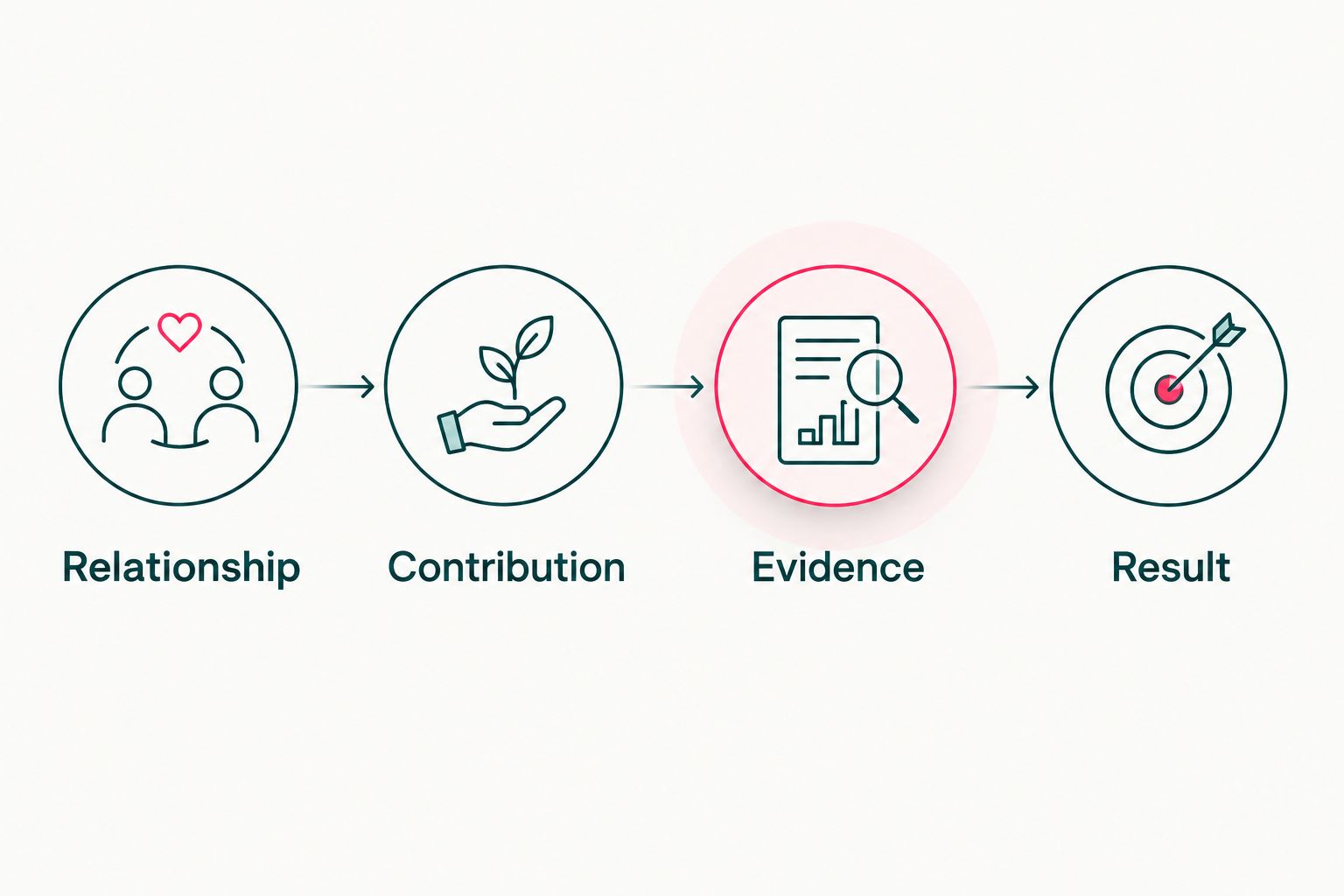
Keep the brief selective. For your 2026 applications, choose 2–3 work examples that match the responsibilities in the job description rather than sending every assignment you completed.
- State when and where you worked together.
- Describe your individual responsibility in plain language.
- Include 2–3 relevant work examples.
- Attach or describe only materials you have permission to share.
- Separate documented outcomes from your interpretation of them.
Request permission and a specific recommendation
Ask privately before listing anyone as a reference. An email works: explain the role, identify the shared work, and ask whether the person feels comfortable giving a positive, specific account. Give them room to decline.
Illustrative request:
I’m applying for entry-level research roles. Would you feel comfortable serving as a reference and discussing my work on the dataset review project? I can send the job description and a short summary of the work you supervised. Please let me know whether you would prefer not to participate.
For a written recommendation, ask the person to describe a contribution they observed and why it mattered. Do not send a finished endorsement and treat their approval as automatic. Your brief supplies context; their account supplies independent judgment.
Voushify is developing structured, shareable endorsements called Voushes, which build a professional trust profile. Voushify is pre-launch: join the waitlist if that format fits your needs, and continue collecting letters or emailed recommendations for current applications.
- Ask permission before sharing a name or contact information.
- Explain the role and the application deadline.
- Identify the contribution you hope the person can discuss.
- Offer your evidence brief without scripting their opinion.
- Confirm the preferred contact method and any sharing restrictions.
Choose the format the application needs
Read the employer’s instructions before deciding how to present references. A reference list, a letter, and an emailed recommendation serve different purposes. A shareable profile does not replace a required form or a requested conversation.
For your 2026 reference folder, keep written recommendations alongside a separate contact list. A letter records a person’s assessment at a particular time. A contact list tells an employer whom to approach for a current conversation. Both need the person’s permission.
A structured endorsement organizes a recommendation into a shareable format. That structure does not make every statement independently established fact. Treat a recommendation as an attributed account, not a guarantee. Ask whether the writer directly observed the claim and whether the description accurately reflects your work.
- Follow the application’s requested format first.
- Save letters with the writer’s name and date.
- Keep contact details separate from public-facing materials.
- Record permission to share each written recommendation.
- Preserve the writer’s wording unless they approve changes.
Prepare your references for each relevant application
Once someone agrees, send a focused update when an employer is likely to contact them. Include the role, the organization, and the responsibilities that connect to your shared work. Avoid forwarding a pile of unrelated job postings.
Suggest a 15-minute conversation if the person wants help recalling the project. Use that time to clarify facts, not rehearse praise. A reference should be free to describe both your contribution and the limits of what they observed.
If an initial request goes unanswered, set a reminder for 5 business days and send one polite follow-up. This is a planning choice, not a universal etiquette rule. If your deadline is closer, say so in the original request and ask someone else rather than assuming consent.
- Send the relevant job description or a concise role summary.
- Explain which shared project connects to the role.
- Offer a 15-minute conversation if useful.
- Tell the reference when contact is expected, if known.
- Thank the person and share meaningful updates afterward.
Maintain a private reference record
Create a simple spreadsheet or document for your 2026 search. Record the relationship, relevant projects, permission status, contact preference, and date you last checked the details. This is an organizational record, not a rating system for people.
Update the record when a reference changes jobs or asks you to stop sharing particular information. A remembered agreement is not a substitute for checking whether someone still wants to participate.
Keep a separate copy for anything you send to employers. Your private notes can include application history and follow-up reminders; the employer-facing version should contain only requested, approved information. Do not publish private phone numbers or email addresses without explicit consent.
- Record when permission was given and what it covers.
- Check names, titles, and preferred contact details before submission.
- Track which employers received each reference’s information.
- Keep private notes out of application attachments.
- Remove information when the person withdraws permission.
Join the Voushify waitlist
Follow the pre-launch platform for structured, shareable professional endorsements.
Compare your reference options
Use the format that answers the employer’s request. These options are complementary. A professor can write a letter and also agree to a reference conversation, but you should confirm permission for each use.
| Option | Best for | Main benefit | Key limitation |
|---|---|---|---|
| Reference contact list | Applications requesting people to contact | Gives an employer an agreed route to ask questions | Contains little evidence by itself; participation needs confirmation |
| Reference letter | Applications requesting a written assessment | Preserves a detailed account in the writer’s own words | Can become dated or describe work unrelated to the new role |
| Emailed recommendation | Collecting a written account directly from an observer | Keeps the recommendation and correspondence together | Needs permission before forwarding or publishing |
| Voushify structured Voushes | Graduates interested in a shareable professional trust profile | Organizes recommendations into structured endorsements | Pre-launch; does not replace an employer’s required process |
For an active application, use the available format the employer accepts. Waiting for a different format should not delay a required reference request. Keep the original correspondence so you retain the context in which the recommendation was given.
Common reference mistakes recent graduates make
Asking only the most senior person
A department head who barely knows you has little direct evidence to share. Ask the tutor, supervisor, or project lead who actually reviewed your contribution. Explain the relationship clearly rather than implying closer supervision than occurred.
Treating a group result as individual proof
A successful team project does not establish your personal contribution. Identify what you owned, what you changed, and what the reference observed. Label illustrative examples as examples and use your actual work in a real request.
Sending the same vague request to everyone
A professor and a shift supervisor observed different parts of your work. Ask each person about the contribution they can credibly discuss. Relevance comes from matching the evidence to the role, not repeating the same praise across several recommendations.
Confusing permission to write with permission to publish
Someone agreeing to email a recommendation has not automatically agreed to public distribution. Ask separately about sharing the text, identifying the writer, and displaying contact details. Preserve those boundaries even when the recommendation is positive.
Assuming a reference proves every claim
A reference can speak only to what they know. A professor who reviewed your final report cannot necessarily confirm how you handled every team disagreement. Keep the scope clear; reference-quality evidence explains its own limits.
FAQ
Who can be a professional reference if I just graduated?
A professor, internship supervisor, campus job manager, client, or volunteer coordinator can be a professional reference if they directly observed relevant work. Check the application instructions because an employer can specify which relationships it accepts.
Can I use a professor instead of a former manager?
Yes, when the application accepts academic references and the professor can describe relevant work. Identify the course, research project, or supervised responsibility so the employer understands the relationship.
Can a classmate be one of my professional references?
A classmate can describe directly observed project work, but use that reference only when the application permits peer references. State that the person was a collaborator rather than a supervisor.
How do I ask someone to be a reference without sounding awkward?
Ask directly whether they feel comfortable giving a positive, specific account of your work. Name the shared project, explain the role, and offer a short evidence brief while making it easy to decline.
Should I send references with every résumé?
Follow the application instructions rather than automatically attaching references to every résumé. Keep an approved reference list ready and share it when requested.
Is a reference letter better than an emailed recommendation?
Neither format is automatically better; the employer’s requirements determine which is suitable. A letter preserves a formal assessment, while an email preserves the writer’s recommendation and its correspondence context.
Can I use Voushify for my applications now?
Voushify is pre-launch, so join the waitlist rather than planning to use the product today. Continue requesting reference letters, emailed recommendations, or agreed reference contacts for current applications.
One last thing
Before sending your next reference request in 2026, remove every adjective from your evidence brief. Read what remains.
If the brief still explains what you did, what the person observed, and why the work mattered, you have something concrete to discuss. If it collapses into a job title and a list of traits, add an example. Make the work easy to recognize before asking someone to recommend it.